

Arturo Fuente ’s Hemingway series is available in five signature vitolas, each a perfecto: the Short Story (4 x 49), the Best Seller (4½ x 55), the Signature (6 x 47), the Classic (7 x 48), and the Masterpiece (9 x 52). All share the same Cameroon wrapper and the same closed perfecto construction, but their filler volume, smoking time, and intensity vary significantly from one size to another. For a retailer, knowing how to guide a customer toward the right Hemingway vitola based on the smoking occasion is a consulting exercise as precise as it is for any other premium line from the Fuente brand.
The Hemingway Perfecto: An Almost Lost Art Revived in 1983
Before going into detail about each vitola, it’s important to understand why the Hemingway series holds a special place in the heritage of Arturo Fuente. In the 1980s, the perfecto shape—tapered at both ends with a rounded head and a closed foot featuring a small lighting nipple—had virtually disappeared from the workshops. The rollers capable of mastering this demanding technique were retiring one after another, and the craft threatened to die out with them. Carlos Fuente Sr. found an old “perfecto” mold in a warehouse in Ybor City, Florida, and brought it back to his workshop in the Dominican Republic to entrust it to his most experienced roller, who was tasked with patiently relearning this technique that had fallen into disuse.
The result of this artisanal restoration effort was named after Ernest Hemingway, in homage to the cigar-loving American writer whose image already embodied, in the eyes of the general public, a certain idea of adventure and masculine refinement. The first size released, in 1983, was the Signature—the only size originally available: a 6-inch perfecto with a ring gauge of 47, which would serve as the foundation for the entire subsequent expansion of the line. It wasn’t until 1988 that other sizes were added to the series, eventually forming the collection of five main vitolas we know today.
This story isn’t just a marketing pitch to be recited mechanically: it explains why every Hemingway cigar, regardless of its size, must be handled and lit differently than a classic parejo cigar. The closed foot requires a specific cutting and lighting technique, which the salesperson must be able to explain confidently to a customer experiencing this type of format for the first time—otherwise, they risk ruining an experience that the Fuente company has spent decades perfecting.
Carlos Fuente Sr. revived the "Perfecto" shape with a unique format, the Signature (6 x 47), which would become the foundation for the entire Hemingway series developed in the years that followed.
Short Story: The Little Perfecto That Became a Cult Favorite in Stores
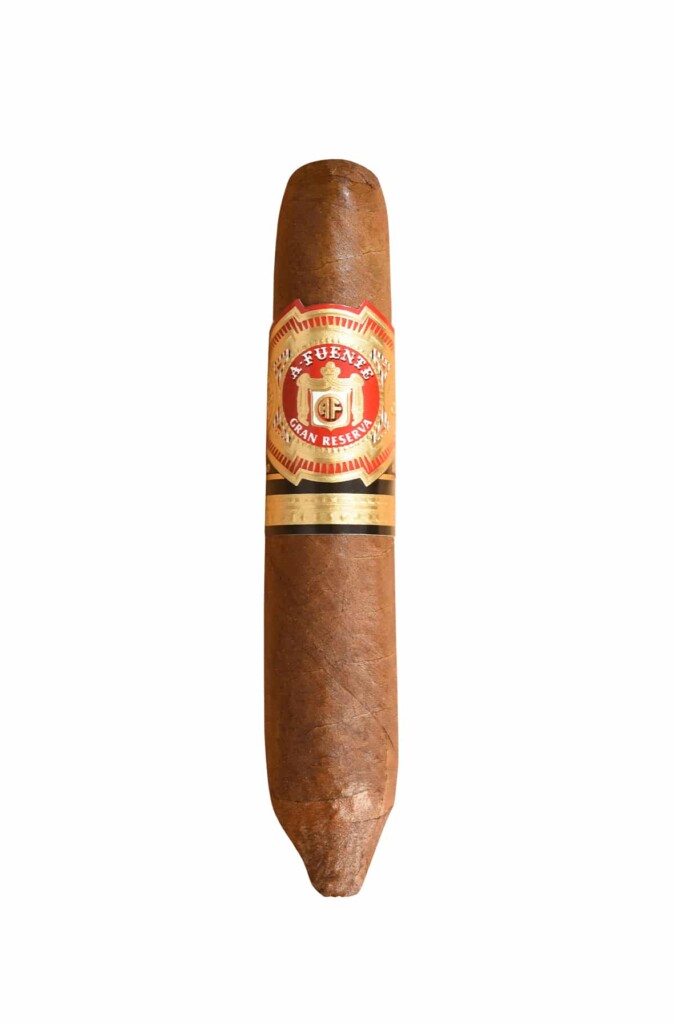
At 4 inches long with a ring gauge of 49, the Short Story is the most compact of the five Hemingway formats—and has undoubtedly been the most popular for over three decades. Its short length does not prevent it from retaining the full perfecto structure—with a tapered head and a closed foot—which makes it almost a greater technical challenge to roll than the longer formats: over such a short length, every variation in the filler’s density is immediately noticeable during combustion.
The smoking time for the Short Story is generally around 30 to 40 minutes, making it the ideal format for a lunch break, a quick moment between appointments, or a gentle introduction for a customer who has never tasted the Cameroon wrapper that characterizes the series. The flavor profile remains true to Hemingway’s DNA—cedar, cream, and a hint of toasted hazelnut—with a rapid evolution that intensifies the experience without ever diluting it. It is this effectiveness, combined with remarkable consistency in craftsmanship from one size to the next, that explains why so many retailers consider it one of the best small-format cigars available on the market, across all brands.
In terms of the sales pitch, the Short Story works particularly well as a product to build loyalty among a clientele that is pressed for time but discerning: it allows you to highlight the quality of the Cameroon wrapper and the precision of Fuente’s rolling without requiring the time commitment of a Classic or a Masterpiece. It’s also an excellent introductory format for introducing the “perfecto” shape to a smoker accustomed solely to parejos.
Best Seller: The Balance Between Body and Generous Tripe Content
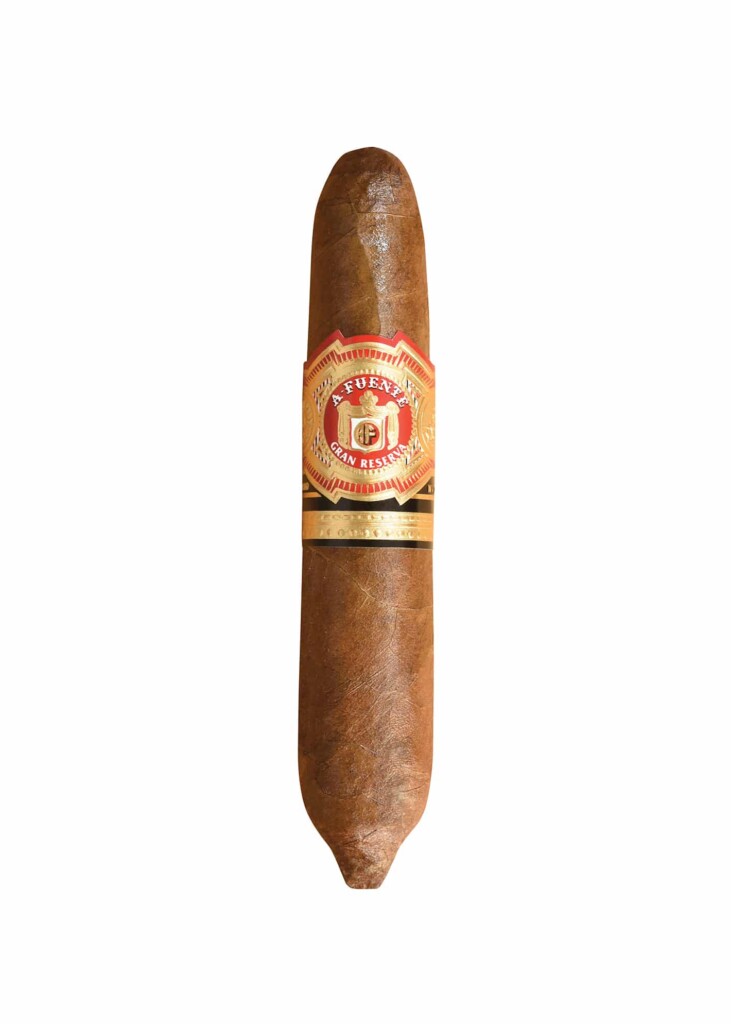
The Best Seller measures 4½ inches with a ring gauge of 55, giving it a much stockier silhouette than the Short Story—almost massive considering its modest length. This generous ring gauge translates directly to a larger filler volume, which slightly slows the rate at which the cigar heats up and allows the binder and Dominican filler to express themselves more fully beneath the Cameroon wrapper.
In terms of smoking time, expect about 45 minutes to an hour—a duration that makes it an ideal transition between the Short Story and the Signature. The flavor profile becomes more rounded: the cedar and creamy notes of the Short Story are complemented here by a more pronounced presence of cocoa and sweet spices, while the mouthfeel becomes creamier as the larger ring gauge allows for a slower, more even burn.
The Best Seller is particularly well-suited for customers who already enjoy the Short Story but want to explore a slightly longer experience without committing to a format longer than an hour. It’s also an excellent choice for a post-meal cigar, where the generous ring gauge ensures an even burn even in cooler settings—such as on a patio—where thinner cigars tend to burn less evenly.
Signature: The Classic Format and Tasting Notes for the 6 x 47
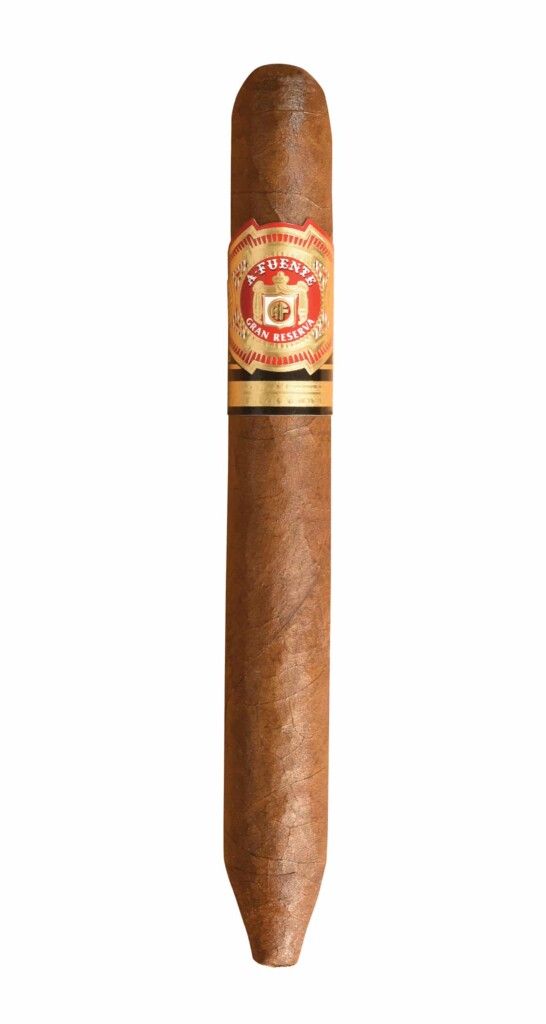
The Signature holds a special place as it was the very first Hemingway size released in 1983, even before the other sizes in the series appeared. Measuring 6 inches in length with a ring gauge of 47, it retains a slender silhouette that visually resembles a classic Corona, while maintaining the characteristic Perfecto structure with its tapered head and closed foot. It was this format that allowed the Fuente company to demonstrate, right from the series’ launch, that the Perfecto shape could offer an experience as balanced as that of a traditional Parejo.
The Signature’s smoking time ranges from 45 minutes to an hour, with a medium flavor profile: cedar and cream on the palate at first, followed by notes of toasted dried fruit and a subtle hint of spice that gently builds in the middle of the tasting, before a slightly sweet and woody finish that rounds out the experience without ever becoming overpowering. This consistent character—neither too light nor too powerful—makes it an excellent benchmark for comparing other Hemingway vitolas: it’s the point of balance against which we mentally measure the livelier Short Story or the full-bodied Classic.
Historically, this is also the format to highlight when a customer is interested in the brand’s heritage rather than simply seeking a recommendation based on taste: explaining that the Signature is the founding format of the entire series—the one for which Carlos Fuente Sr. revived a long-forgotten perfecto mold—adds a narrative depth that no other format in the line can claim in the same way.
Classic: the medium-full-bodied vitola for an in-depth tasting experience
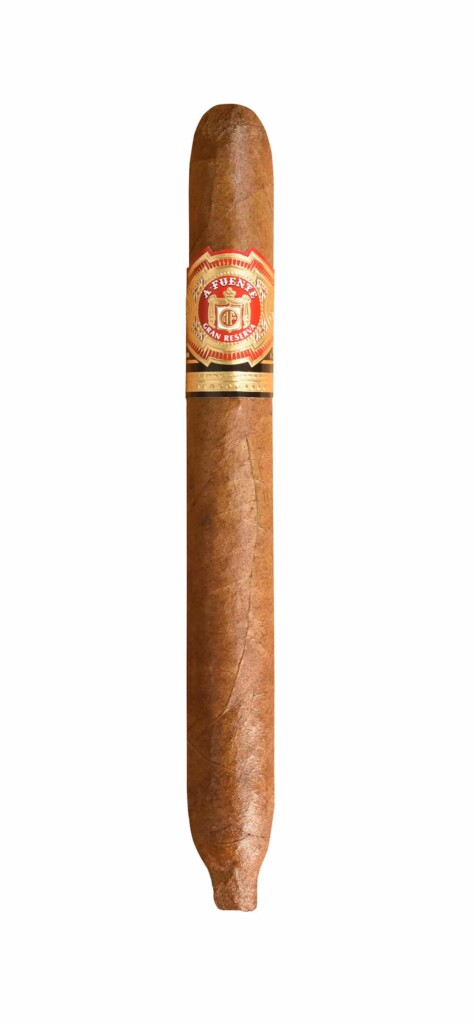
The Classic measures 7 inches with a ring gauge of 48, making it the longest size in the series before reaching the massive proportions of the Masterpiece. Its medium-full classification clearly distinguishes it from the Signature’s medium profile: the fuller filler and longer burn time allow the blend to develop additional complexity, with layers of flavor that overlap rather than simply following one another.
Allow between one hour and one hour and fifteen minutes to smoke a Classic under ideal conditions—a timeframe that naturally lends itself to a prolonged moment of relaxation, such as late in the evening, while reading, or paired with an aged spirit capable of keeping pace with the cigar’s growing intensity. The flavor profile, which is full-bodied compared to the Signature, retains the characteristic cedar-cream structure of the Cameroon wrapper on the draw, but gradually develops notes of earth, toasted nuts, and more assertive spices—a reminder that this size is intended for smokers already familiar with the intensity of premium Dominican cigars.
When recommending cigars in-store, the Classic should be presented as the “mature” vitola in the Hemingway line: neither the entry-level format represented by the Short Story nor the collector’s item that is the Masterpiece, but the perfect middle ground for a connoisseur who wishes to explore the full aromatic depth that the Cameroon wrapper has to offer over a leisurely smoking session.
Masterpiece: The 9-inch giant reserved for special occasions
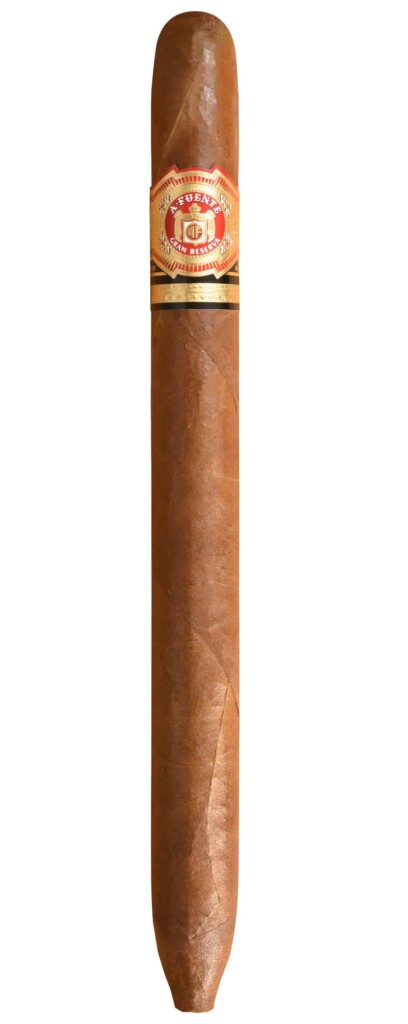
The Masterpiece is, as its name unambiguously suggests, the most impressive size in the entire Hemingway series: 9 inches long with a ring gauge of 52—a considerable amount of tobacco that requires both an extremely experienced roller and a smoker willing to devote nearly two hours to a single smoking session. Its size immediately brings to mind the large collector’s formats that are rarely found outside of companies capable of perfectly controlling the evenness of burn over such a length.
With such a long smoking time, the Masterpiece lends itself to a true exploration in three distinct phases: a gentle opening featuring the familiar cedar-cream notes of the Cameroon wrapper, a middle section that grows in complexity with notes of cocoa, coffee, and mild spices, and a final portion that can reveal surprising intensity given the amount of filler still remaining. It is precisely this three-act progression—made possible by the length of the cigar—that makes the Masterpiece a unique experience rather than simply a larger version of the Classic.
In the store, the Masterpiece should be reserved for special occasions: a tasting evening among enthusiasts, a memorable birthday gift, or a collector’s item to be stored in a humidor for several years before smoking. It is rarely appropriate to offer it to a customer in a hurry or a novice, as this could lead to a frustrating experience due to a lack of time to fully appreciate it.
Comparison Chart of the Five Hemingway Vitolas
Here is a summary chart to keep on hand to quickly guide a client based on how much time they have and the intensity they’re looking for.
| Cigar size | Dimensions | Estimated smoking time | Body | Recommended Event |
|---|---|---|---|---|
| Short Story | 4 x 49 | 30 to 40 minutes | Medium | A Short Break: An Introduction to the Perfecto |
| Best Seller | 4½ x 55 | 45 minutes to 1 hour | Medium, rounder | Transition, end of meal |
| Signature | 6 x 47 | 45 minutes to 1 hour | Balanced midrange | Historical Reference Format |
| Classic | 7 x 48 | 1 hour to 1 hour and 15 minutes | Medium-Full | Evening event, in-depth tasting |
| Masterpiece | 9 x 52 | Nearly 2 hours | Full, scalable | A rare find, from a private collection |
Recommendations for the cut and styling specific to the Hemingway Perfecto
The “perfecto” shape requires different handling techniques than those used for a classic “parejo” cigar, and this is a point that many salespeople overlook, even though it directly affects customer satisfaction. The closed foot, with its characteristic small nipple, must be carefully cut using cigar scissors or a double-bladed guillotine, removing just enough material to allow for a proper draw without excessively exposing the filler, which would cause the cigar to burn too quickly and unevenly given the intricate construction of this format.
Lighting also requires more patience than with a parejo: the tapered surface of the foot requires you to rotate the cigar over the flame to gradually char the entire circumference before taking the first puffs; otherwise, the burn will become uneven within the first few minutes. For the larger sizes, such as the Best Seller or the Masterpiece, this lighting process can take nearly a full minute—a fact that’s best explained to a novice customer in advance to avoid any frustration or sense of failure over what is, in reality, simply a technical characteristic of the perfecto format.
One last practical tip to always share: the tapered head of a Perfecto, unlike the smooth wrapper of a Robusto or a Churchill, is less tolerant of an aggressive cut—such as that made by a single-blade guillotine cutter—which risks tearing the wrapper on this thinner part of the cigar. Recommending a lighter cut—or even the use of a cigar cutter designed for figurados—is one of the small details that distinguishes expert sales advice from a simple counter transaction.
To round out the in-store presentation of this series, you can direct customers to the entire Hemingway collection atArturo Fuente , which includes the five vitolas detailed in this article, as well as to the article explaining how the cigars are made at Arturo Fuente to learn more about the artisanal craftsmanship behind each Perfecto.
Pairings and occasions based on the selected Hemingway format
The Cameroon blend, with its signature aroma dominated by cedar, cream, and a subtle hint of spice, lends itself to different pairings depending on the amount of coffee and the duration of the tasting. With a short format like the Short Story or the Best Seller, a strong coffee or an espresso perfectly complements the liveliness of the flavor profile, echoing the roasted notes that emerge from the very first minutes. The brevity of the serving size also allows for a pairing with a light cocktail, such as a Negroni or a Spritz, whose bitterness and citrus notes provide a pleasant contrast to the sweetness of the blend without ever overpowering it.
With the Signature and Classic, the developing body calls for more structured pairings: a barrel-aged amber rum, a Scotch whiskey with moderate peat notes, or a diluted coffee accompanied by a square of dark chocolate allow you to follow the cigar’s evolution throughout its entire duration without ever competing with it in intensity. The Masterpiece, on the other hand, deserves a pairing that matches its grandeur: an XO cognac, a well-aged Armagnac, or a long-aged single malt whiskey offer the depth needed to hold their own throughout nearly two hours of tasting, while contributing their own nuances of dried fruit and wood that naturally complement the Cameroon’s aromatic profile.
The Masterpiece, at 9 inches long, requires such meticulous craftsmanship that only a select few rollers at Fuente’s Dominican workshop are authorized to roll it—a privilege comparable to that reserved for the greatest historic Cuban vitolas.
This concept of pairing based on increasing intensity—from a strong espresso for a “Short Story” to an XO cognac for a “Masterpiece”—serves as a useful guiding principle to convey in the store: it helps customers understand that choosing a Hemingway vitola is never a trivial decision, but rather one that involves a whole tasting experience, from the time available to the glass that will accompany it.
How to Store Hemingway Leather Jackets Without Damaging Their Tapered Collars
The Perfecto shape requires specific storage precautions that a professional cigar humidor must incorporate into its storage routine. The tapered head and conical foot—which are slimmer than the cylindrical wrapper of a Robusto or Churchill—are more vulnerable to impact and pressure from overcrowded storage: it is best to arrange Hemingway boxes so that the cigars do not bear excessive weight on these fragile areas, particularly during prolonged storage of the Masterpiece, whose length increases the risk of cracking if the box is not properly supported.
The recommended humidity level of 68 to 72 percent remains valid for the entire series, but the Cameroon wrapper—known for its thinness and slightly toothy texture—is less tolerant of sudden changes than a thicker wrapper. A rapid change in humidity can cause visible wrinkling of the wrapper on the tapered portion of the foot—a cosmetic flaw that, while not necessarily affecting the taste, may be enough to deter a discerning customer when selecting a box. Regular visual inspection of these sensitive areas—particularly on slower-moving items like the Masterpiece—allows you to anticipate this type of issue before it becomes visible in the display case.
FAQ – Hemingway Vitolas
Q: What is the difference between the Short Story and the Best Seller?
The Short Story measures 4 x 49, while the Best Seller measures 4½ x 55: a modest difference in length, but the Best Seller has a significantly larger ring gauge, which results in a greater filler volume, a slower burn, and a slightly rounder, more cocoa-rich flavor profile than the Short Story.
Q: Why are all Hemingway formats perfectos?
The perfecto shape, with its tapered head and closed foot, has been the hallmark of the entire series since its launch in 1983, when Carlos Fuente Sr. revived a nearly lost mold found in a Florida warehouse. Maintaining this shape across all five vitolas helps preserve the artisanal identity that has made the series famous.
Q: Which Hemingway format would you recommend to a customer in a hurry?
The Short Story, with a smoking time of 30 to 40 minutes, remains the best choice for a short break. It retains the full aromatic profile characteristic of the Cameroon wrapper despite its compact size.
Q: Is the Masterpiece suitable for a beginner in premium cigars?
No, it’s best to reserve the Masterpiece for an experienced cigar enthusiast who has nearly two hours to spare. A beginner will get more enjoyment out of a Short Story or a Best Seller, which are shorter and easier to fully appreciate when first exploring the series.
Q: Why is the Signature considered the benchmark size of the series?
Because it was the very first Hemingway size released in 1983, before the other sizes were introduced starting in 1988. Its medium, balanced profile still serves today as a point of comparison for gauging the intensity of the other vitolas in the line.
Q: How do you properly cut a Hemingway cigar with a closed foot?
You should use cigar scissors or a guillotine designed for figurados, and remove only the amount of material strictly necessary to ensure a smooth draw, without exposing the filler too much. Cutting too much off this type of foot causes rapid and uneven burning from the very first minutes.
Conclusion
The five Hemingway vitolas are not merely variations in size based on the same blend: each, in its own way, tells the story of a Perfecto mold saved from oblivion and of a craftsmanship that Carlos Fuente Sr. chose to revive rather than let disappear. From the Short Story, which can be enjoyed in a thirty-minute break, to the Masterpiece, which demands nearly two hours of attention, each format features the same Cameroon wrapper and the same high standards of craftsmanship, yet offers a different gateway into the Hemingway universe.
For a retailer, mastering these nuances of smoking time, body, and the ideal occasion for tasting transforms a simple cigar sale into a true exercise in personalized consultation. Recommending the right Hemingway format at the right time honors the artisanal dedication that Fuente poured into reviving this perfecto shape more than four decades ago, and it offers each customer the exact experience they’re looking for—whether they have thirty minutes or an entire evening to devote to their cigar.
